


With an extensive collection of 30,469 printed materials, 61,700 e-journals, 132 databases, and 914,036 e-books, the ANAMED Library provides access to numerous significant resources in the fields of archaeology, art history, and architecture. Koç University holds more than 210,000 digital items and images, including prints, photographs, slides, maps, newspapers, posters, postcards, manuscripts, and videos. The Hatice Gonnet-Bağana and Josephine Powell donation collections have been digitized by the Koç University Suna Kıraç Library and made available to researchers via open access in the digital collections archive.

Donation collections constitute a vital part of our library, featuring over 13,000 books, journals, and archival materials donated by esteemed professors. These collections cover subject areas such as Ancient, Turkish, Central Asian, Ottoman, and Balkan History, as well as Islamic Art and History, Anatolian Archaeology, Anatolian and Yörük Culture, Byzantine Art and Architecture, Numismatics, and Hittitology. The library’s holdings include the collections of Esin Atıl, Şinasi Tekin, Henry Maguire & Eunice D. Josephine Powell, Hatice Gonnet-Bağana, Jacques Lefort, Ömer Diler, Anthony Bryer, Muhibbe Darga, Slobodan Ćurčić, Steven Runciman, and Melek Delilbaşı.

Steven Runciman Collection
Born in 1903 and passing away in 2000, Steven Runciman was not only one of the most prominent historians of the Crusades but was also described by the renowned Byzantinist Paul Magdalino as a “great pundit of Byzantine Studies.” The Scottish historian’s three-volume work, A History of the Crusades, is still considered a definitive reference for the period. Among his many published works are Eastern Schism (1955), The Sicilian Vespers (1958), The Fall of Constantinople: 1453 (1965), and The Last Byzantine Renaissance (1970).
Acquired through the generous donation of the University of St. Andrews, the Sir Steven Runciman Collection is one of the cornerstones of the ANAMED Library. Comprising approximately 3,000 publications across the disciplines of art history, archaeology, and architecture, the collection spans the Seljuk, Byzantine, and Ottoman periods.
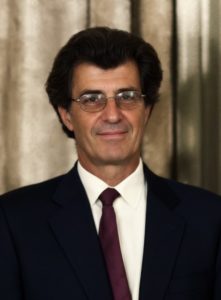
Jacques Lefort Koleksiyonu
Jacques Lefort, Director Emeritus at the École Pratique des Hautes Études (IVth Section), was a leading expert in Byzantine studies and a close friend of Hatice Gonnet-Bağana.
In 2014, shortly before his passing, he followed Gonnet-Bağana’s example and donated his valuable collection to the ANAMED Library.
The Jacques Lefort collection consists of 636 publications focusing on the fields of Byzantine History and Art History.
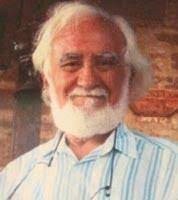
Şinasi Tekin Collection
Şinasi Tekin was one of the preeminent experts in the discipline of Turkology and a founding figure of Turkish Studies in North America. After receiving his doctorate from the University of Hamburg, he worked at Erzurum Atatürk University. In 1965, he joined Harvard University as a faculty member, where he remained until his passing in 2004. He was the founder and long-time editor of the Journal of Turkish Studies. In addition to being an expert on Old Uyghur Turkish and Buddhist culture, Tekin was one of the most significant teachers of Ottoman Turkish, mentoring dozens of leading Ottoman historians. Alongside his wife, Professor Gönül Alpay Tekin, and his student Selim Sırrı Kuru, he established the Harvard-Koç University Intensive Ottoman & Turkish Summer School in Cunda in 1996—an institution that remains active today through the institutional collaboration of Koç, Harvard, and Uludağ Universities.
Acquired by the Suna Kıraç Library in the mid-2000s, the Şinasi Tekin Collection comprises approximately 1,800 titles on Turkish, Ottoman, and Central Asian history and languages.
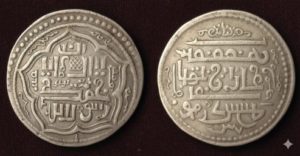
Ömer Diler Collection
Ömer Diler (1945–2005) was a prominent Turkish numismatist who specialized in Islamic coinage. Although he was trained as a chemical engineer, he pursued his passion for numismatics and became a member of both the Turkish and American numismatic societies. His book on Ilkhanid coinage, published posthumously, is considered the definitive work in the field. The Ömer Diler Collection was acquired by the ANAMED Library in 2009, thanks to the Getty Foundation’s Art History Research Center Fund.
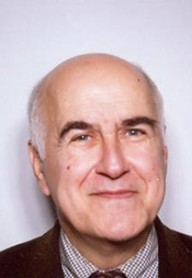
Slobodan Ćurčić Collection
Slobodan Ćurčić is Professor Emeritus at Princeton University. Having received his PhD from New York University, he is a leading expert on Late Antique and Byzantine art and architecture.
He has directed numerous archaeological excavations in the former Yugoslavia, Italy, Greece, and Cyprus, and has authored many books and articles.
His publications include Art and Architecture in the Balkans: An Annotated Bibliography (1984), The Twilight of Byzantium (co-authored with D. Mouriki, 1991), and Middle Byzantine Architecture on Cyprus: Provincial or Regional (2000). The Slobodan Ćurčić Collection consists of 276 volumes focusing on Byzantine art and architecture.
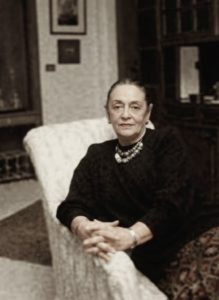
Muhibbe Darga Collection
Muhibbe Darga was one of the pioneers of Anatolian archaeology. After obtaining her doctorate from Istanbul University, she participated in and directed numerous excavations across Anatolia and taught at the same university for many years.
She conducted research and lectured on the civilizations and languages of the Assyrians and Hittites. She is the author of several books, including Women in Ancient Anatolia (1976), Hittite Architecture, The Art of Construction: Archaeological and Philological Data (1985), and Hittite Art (1992).
The Muhibbe Darga Collection consists of 580 titles focusing on Hittitology and the ancient eras of Anatolia.
Hatice Gonnet-Bağana Collection
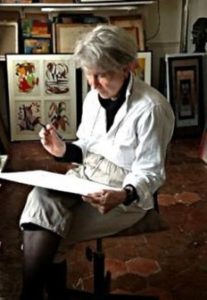
Archaeologist Hatice Gonnet-Bağana is one of the most prominent experts in the discipline of Hittitology. Having studied and taught in France, she directed numerous excavations in Anatolia and collaborated with UNESCO on the preservation of archaeological sites. Her generous donation of archives and books in 2014 established Koç University as a significant center for Hittitology.
While the book collection includes 206 publications, the most vital part of the collection consists of archival documents. These include Gonnet-Bağana’s correspondence with prestigious institutes and esteemed researchers in the field (such as David Hawkins, Paolo Emilio Pecorella, Halime Hüryılmaz, Marie-Louise Vollenweider, Andreas Müller-Karpe, Helmuth Bossert, Paul Garelli, Jamil Armand, and Mustafa Büke), as well as excavation photographs taken alongside the renowned photographer Ara Güler. The collection has been digitized by the Koç University Suna Kıraç Library and is available through open access.

Esin Atıl Collection
A leading expert in the field of Islamic Art, Esin Atıl authored numerous books and articles and curated various exhibitions. She received her PhD from the University of Michigan and served for many years as the Curator of Islamic Art and Historian of Islamic Art at the Smithsonian Institution.
Among her works is Levni and the Surname: The Story of an Ottoman Festival (1999), which is considered one of the most significant publications in the field.
The Esin Atıl Collection is one of the foundational collections of the ANAMED Library, comprising 2,000 books and journals and 18.000 visual materials related to Islamic art and history.
Josephine Powell Collection
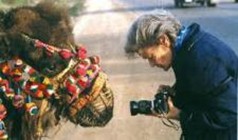
American photographer and collector Josephine Powell was one of the last great travelers of Anatolia. Born in New York in 1919, she earned her undergraduate degree from Cornell University in 1941. After living in Tasmania, Germany, and Italy, she moved to Istanbul in 1974. When she was commissioned to write a book on kilims, she realized the lack of existing research in the field and began traveling across Anatolia. Throughout the 1970s and 80s, she visited nomads (Yörüks) and villagers, photographing their daily activities and handicrafts. Developing a profound admiration for the lives and weaving arts of rural women, she compiled a magnificent archive of photographs and field notes on textiles woven by nomadic, semi-nomadic, and settled weavers.
In the mid-1980s, she was among the founders of DOBAG (the Natural Dye Research and Development Project). She also played a role in establishing the ethnographic department of the Museum of Turkish and Islamic Arts in Istanbul. In 2002, she donated her architectural photography collection to Harvard University’s Fine Arts Library. Portions of her photography and ethnographic object collections are held by the British Museum, Harvard University, the Tropenmuseum (Amsterdam), and the Wereldmuseum (Rotterdam).
Just three years before her passing in 2007, she donated her collection to the Vehbi Koç Foundation. The collection consists of 33,000 field notes, slides, negatives, photographs, and books on Anatolian villages and Yörük culture. The archive of 28,000 slides has been digitized by the Koç University Suna Kıraç Library. The donated books and journals constitute a special collection of 1,500 volumes on various aspects of Anatolian history. In 2011, ANAMED organized an exhibition based on Josephine Powell’s photographs, curated by Kimberly Hart.
Eunice Dauterman Maguire & Henry Maguire Collections
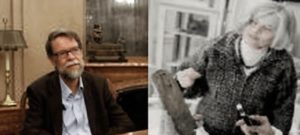
One of the most significant milestones in the expansion of the ANAMED Library collection was made possible by the donation of the personal collections of renowned Byzantine art historians Eunice Dauterman Maguire and Henry Maguire in 2013.
Eunice Dauterman Maguire, Curator of the Archaeological Collection at Johns Hopkins University, is the author of Weavings from Roman, Byzantine, and Islamic Egypt, and co-author (with Henry Maguire) of Art and Holy Powers in the Early Christian House and Other Icons: Art and Power in Byzantine Secular Culture.
Henry Maguire, Professor Emeritus of Byzantine Art History at Johns Hopkins University, served as the Director of Byzantine Studies at Dumbarton Oaks between 1991 and 1996. He has authored numerous books on Byzantine art history and visual culture. By donating their personal collection of 1,500 volumes to the ANAMED Library in 2013, Henry Maguire and his wife Eunice Dauterman Maguire significantly contributed to establishing the library as a leading research center for Byzantine studies.
Anthony Bryer Collection
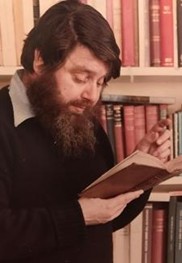
The late Anthony Bryer (1937–2016), Professor Emeritus of Byzantine History at the University of Birmingham, completed his doctorate at Balliol College on the Empire of Trebizond (1204–1461). Throughout his career, he held fellowships at the University of Athens, Dumbarton Oaks, and Merton College, Oxford.
Bryer authored numerous articles and seminal books on the history and culture of the Pontos region, the late Ottoman Empire, and the Byzantine Empire, including The Byzantine Monuments and Topography of the Pontos, Peoples and Settlement in Anatolia and the Caucasus, 800–1900, and The Post-Byzantine Monuments of the Pontos: A Sourcebook. He was the founder of the Centre for Byzantine, Ottoman and Modern Greek Studies at the University of Birmingham, which he directed from 1976 to 1994, and in 1975, he founded the journal Byzantine and Modern Greek Studies, one of the pioneering publications in the field. Bryer also served as the Chairman of the British Committee of the International Association of Byzantine Studies (1989–95) and as Chairman of the British Institute of Archaeology at Ankara (1996–2000).
A doyen of research on Anatolian civilizations, Anthony Bryer donated his private collection to the Koç University ANAMED Library in 2016, shortly before his passing. Comprising approximately 500 volumes from 15 journals and book series—including Eastern Churches Review, Byzantinoslavica: International Journal of Byzantine Studies, Byzantion, Revue Internationale des Études Byzantines, Petits Propos Culinaires: Essays and Notes to do with Food, Cookery and Cookery Books, Revue des Études Byzantines, Sobornost, and Transactions of the Royal Historical Society—this collection has significantly enriched the library, particularly in the field of Byzantine Studies.
Melek Delilbaşı Collection
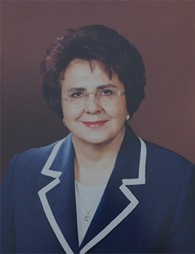
Melek Delilbaşı graduated from the Department of Medieval History at Ankara University’s Faculty of Languages, History, and Geography in 1968. She continued her studies at the University of Thessaloniki between 1970 and 1972 and received her PhD from Ankara University in 1973. After conducting research at the British Museum and King’s College London from 1973 to 1974, she held a research fellowship at the Harvard Center for Byzantine Studies (Dumbarton Oaks) in Washington, D.C., from 1987 to 1988.
She was promoted to the rank of Professor in 1988. Delilbaşı served as the Chair of the Department of History at Ankara University from 1989 to 1994 and as the Chair of the Department of Modern Greek Language and Literature from 1990 to 2005. Additionally, she lectured on “Byzantine-Ottoman History” at Middle East Technical University.
Her articles and translations concerning early Ottoman history, late Byzantine history, and Ottoman cadastral surveys (tahrir defterleri) have been published in numerous journals, including Belleten, Turkish Review Quarterly Digest, Atatürk Kültür Dil ve Tarih Yüksek Kurumu Bülteni, Association Internationale d’Études du Sud-Est Européen Bulletin, Türk Tarih Kurumu Belgeler Dergisi, and Tarih Araştırmaları Dergisi. She has served as the Vice President of the International Committee and the Turkish National Commission for South-East European Studies (AIESEE), and as the President of the National Committee for Byzantine/Eastern Roman Studies at the Turkish Historical Society.
In late 2018, Melek Delilbaşı donated her personal collection—comprising 848 volumes in Greek, English, Turkish, and other languages—to the ANAMED Library. This donation has significantly contributed to the growth of the library’s holdings in the fields of late Byzantine history, Balkan history, and early Ottoman history.
With our sincerest thanks and respects to all the donors who have enriched the ANAMED Library Collections.
Çiğdem Yıldırım
ANAMED Library Coordinator